
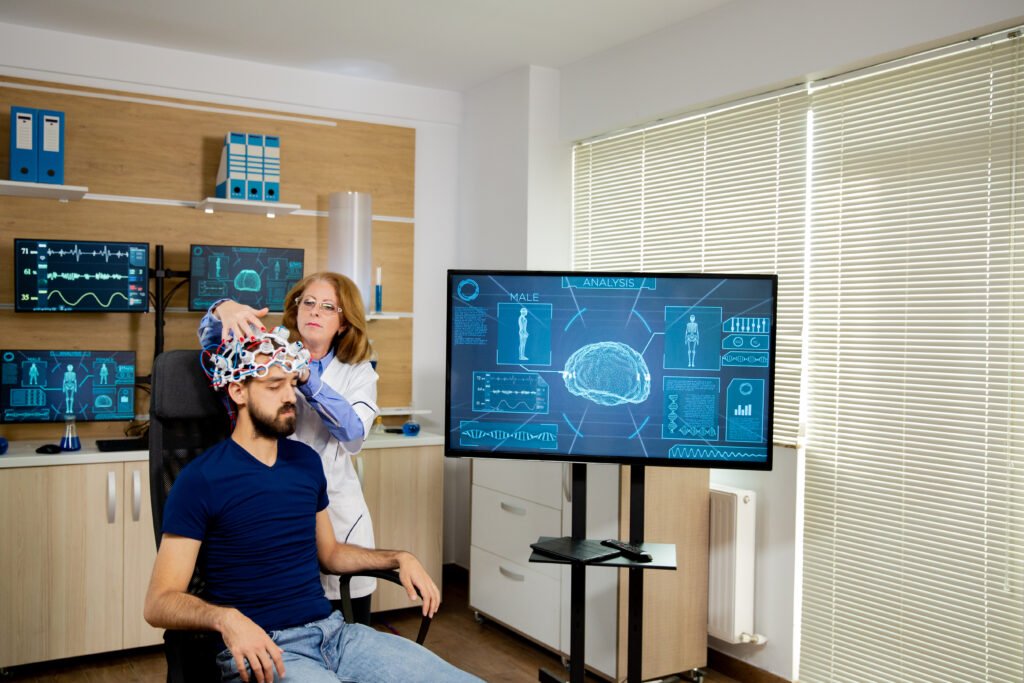
In 2025, the boundary between human thought and digital systems is dissolving. Thanks to advances in Brain-Computer Interfaces (BCIs), we are now witnessing direct communication between the brain and machines—redefining accessibility, productivity, and even consciousness itself.
“BCIs are no longer science fiction. They’re the Wi-Fi connection between your thoughts and the digital world.”
— Dr. Lin Mei, NeuroTech Labs
What Are Brain-Computer Interfaces?
Brain-Computer Interfaces are systems that establish a direct link between the human brain and an external device—enabling users to control software, prosthetics, or even robotic limbs using their thoughts. These systems rely on brain signal recording technologies like EEG, fNIRS, or implanted neural chips to decode neural activity into digital commands.
Why BCIs Are a Major Tech Trend in 2025
- Assistive Technology Breakthroughs
BCIs are giving paralyzed individuals the power to control wheelchairs, type on computers, or even speak via synthesized voice—all through thought alone. - Hands-Free Computing
Mind-controlled applications are emerging for gaming, AR/VR navigation, and productivity tools, making interaction more immersive and intuitive. - Mental Health Monitoring
BCIs are being used to detect depression, anxiety, or PTSD based on brainwave patterns—paving the way for personalized neurotherapies. - Human-AI Symbiosis
Advanced BCIs allow real-time feedback loops between human thought and AI agents, enhancing decision-making, memory recall, and information access.
“In a world flooded with screens, thought-based interaction is the next natural evolution.”
— Marco Velasquez, CEO of NeuroFlux
Companies & Projects Leading the BCI Revolution
- Neuralink (Elon Musk): Developing implantable chips that allow high-bandwidth brain-computer communication.
- Synchron: FDA-approved neural interface for controlling devices via brain signals.
- NextMind: A non-invasive neural interface for real-time interaction in AR/VR environments.
- Meta: Exploring wrist-based BCIs for seamless input in future metaverse platforms.
Ethical Considerations & Challenges
While BCIs offer immense promise, they also raise concerns:
- Cognitive Privacy: Who owns your brain data?
- Digital Consent: What happens when thoughts can trigger actions?
- Mental Overload: Could neural feedback interfere with natural brain processes?
Governments and ethics boards are working to draft neuro-rights legislation to ensure safe development and deployment of this emerging tech.
The Road Ahead: What’s Next for BCIs?
In the next five years, expect BCIs to:
“The ultimate goal of BCI isn’t just control—it’s cognition enhancement.”
— Dr. Ananya Rao, MIT NeuroLab